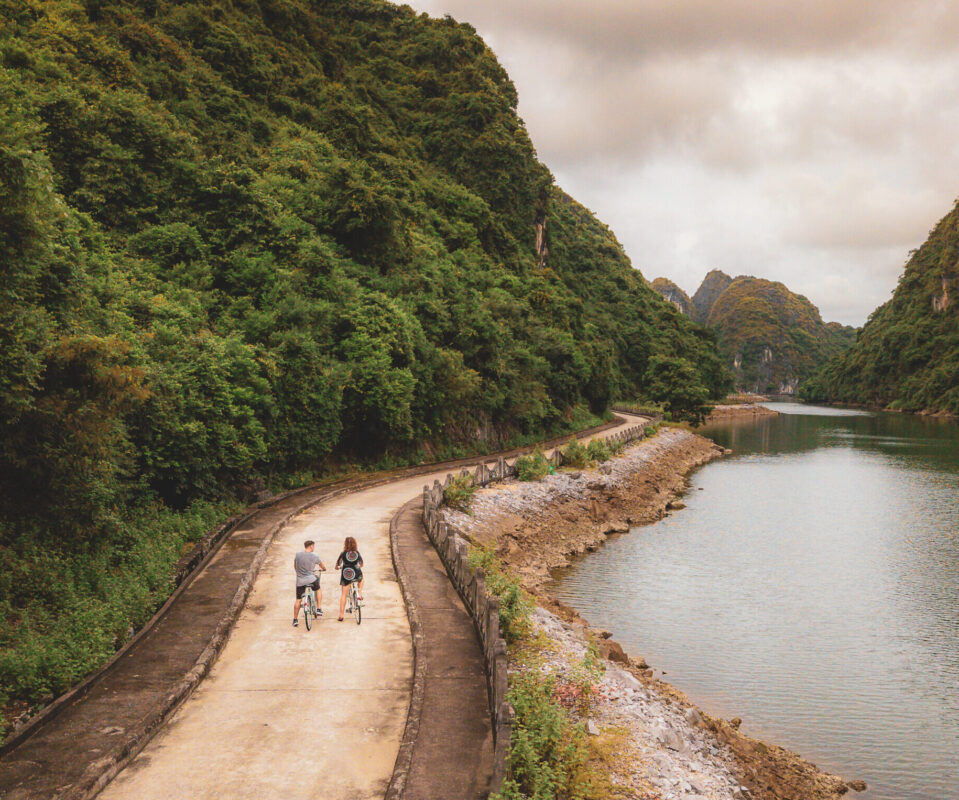
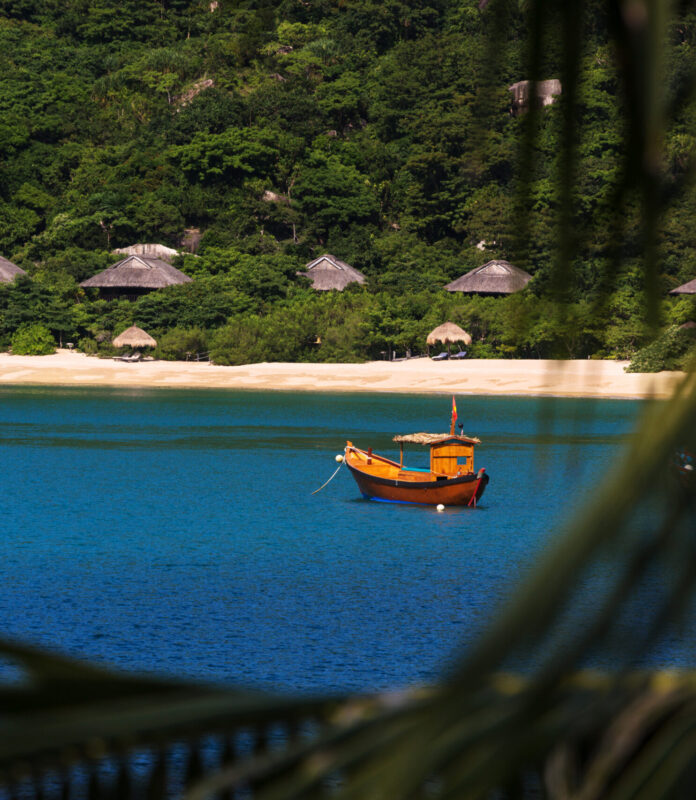
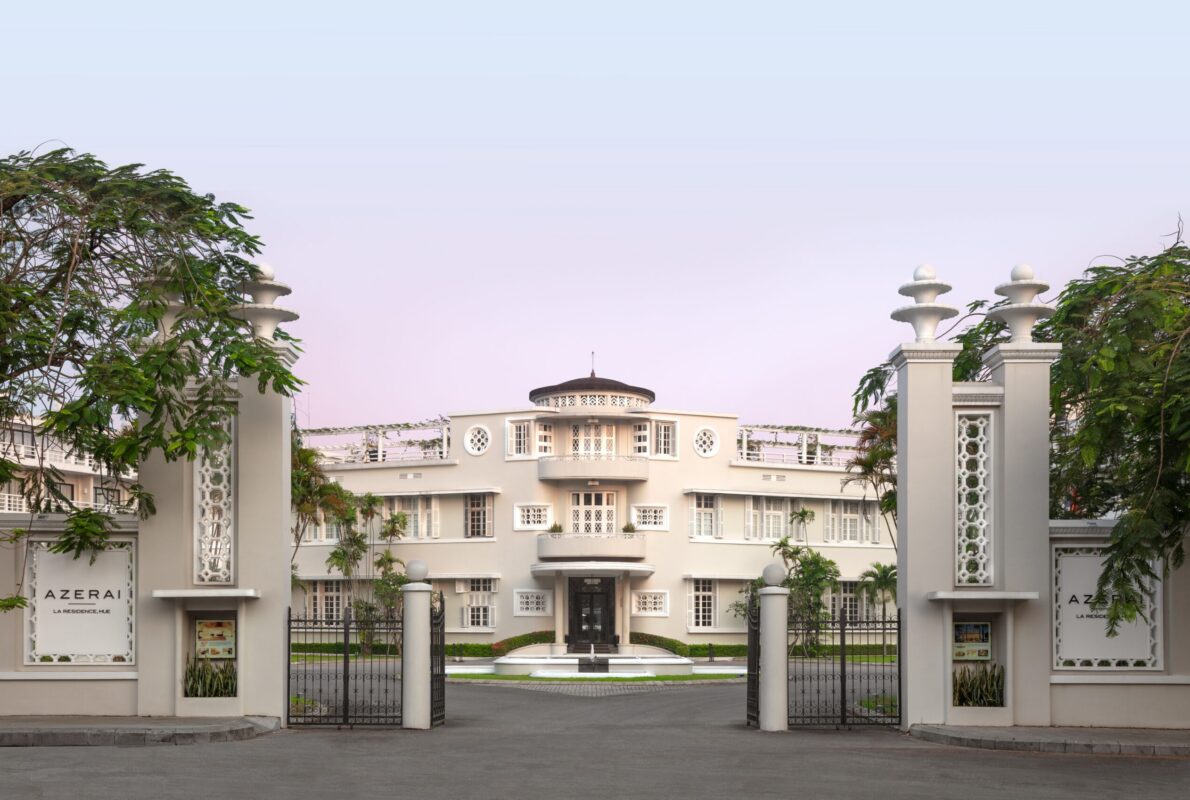
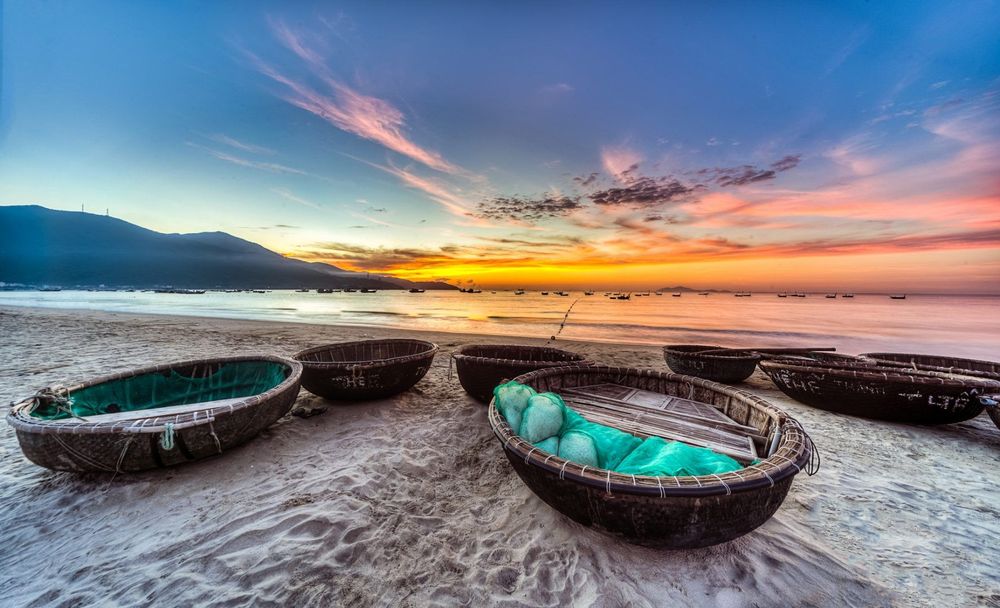
Vietnam of today is a youthful nation fueled by the desire for modernisation and commercialisation while protective of its traditional past. In the stoic political capital of Hanoi in the north and vibrant cosmopolitan Ho Chi Minh City in the south, observing modern cities in the making. But along small streets, like those in the Old Quarter in Hanoi, you will still find silversmiths practicing their century-old trade, far removed from the modern changes around them. The former imperial capital of Hue and the ancient port city of Hoi An offer an evocative glimpse into the country’s rich historical past.
Hanoi, Halong/Lan Ha bay, Mai Chau, Hue, Hoi An, Saigon, Mekong, Phu Quoc Island
20 Days - 19 Nights
Essential Vietnam
Hanoi, Ha Long Bay, Hue, Hoi An, Saigon
12 Days - 11 Nights
Overview
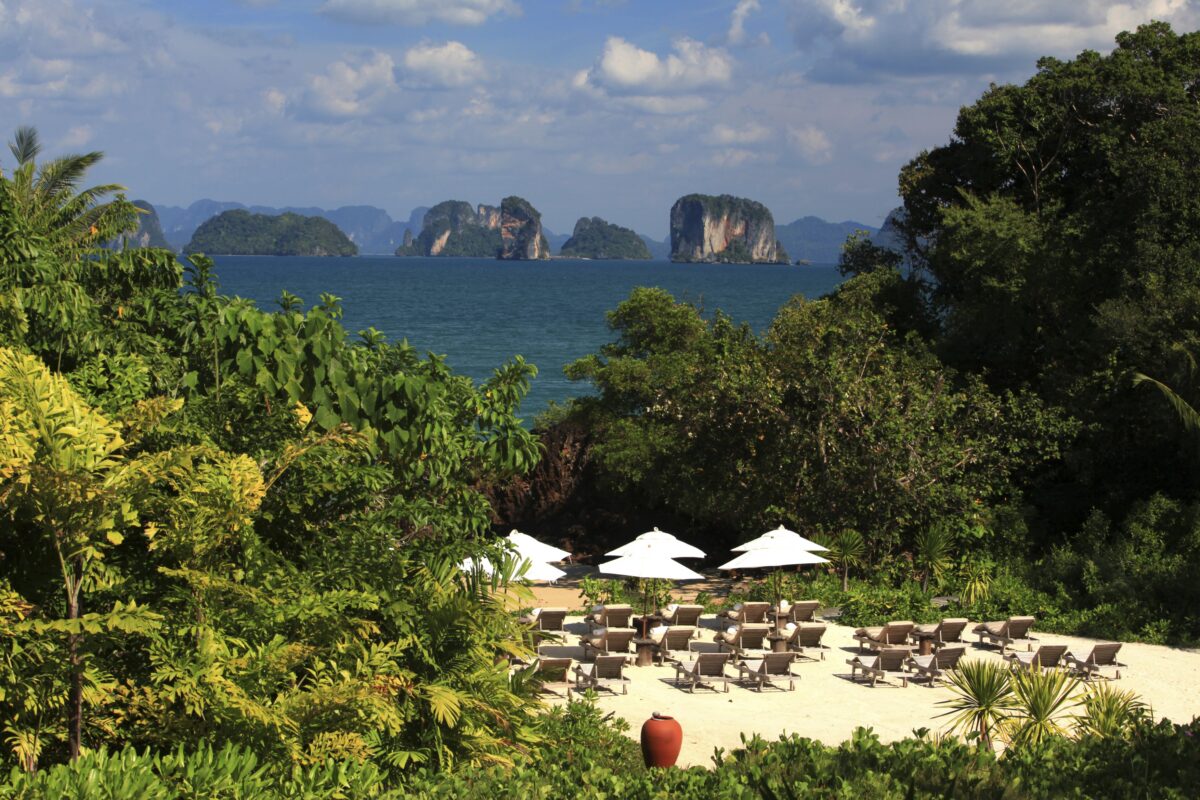
Thailand is one of the most favorite holiday destination in Asia. It has rich historic culture, lively arts, beautiful beaches, exciting nightlife, friendly and hospitable people and with one of the best cuisines in the world makes Thailand a fascinating country to visit. Thailand also serves as a hub for Southeast Asia, is well placed to combine with other countries in the region.
Bangkok is the largest and most populous city in the country. It has more 10 million inhabitants and is known among Thais as Krung Thep which means “city of angels”.
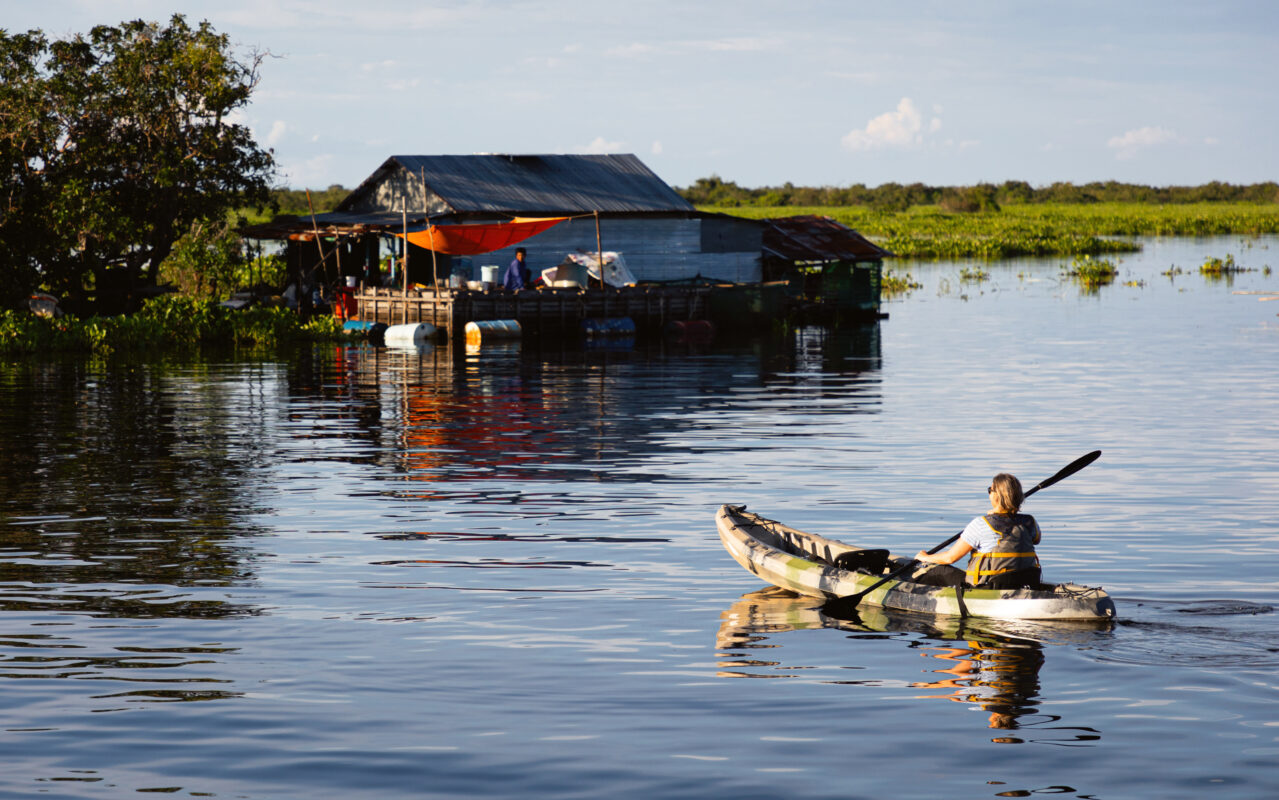
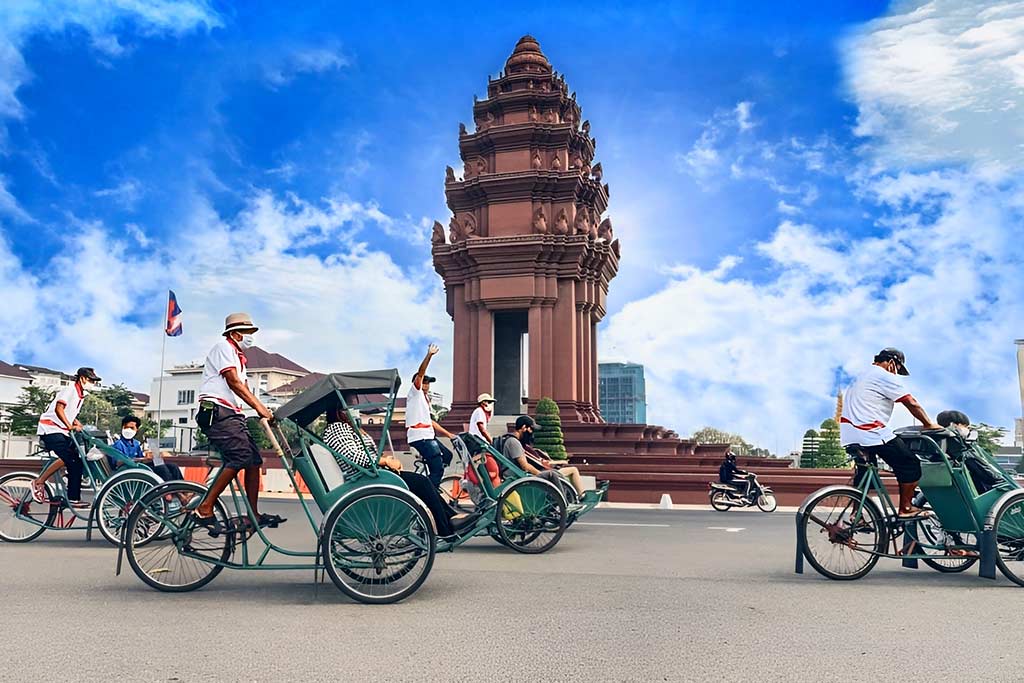
Torn by a decade of civil war, Cambodia has only recently experienced peace and is beginning to establish itself as an attractive tourist destination. As one of the poorest countries in the world, the country has relied heavily on tourism for its economic growth. The government of Cambodia has given priority to developing the country’s cultural and eco-tourism industries to facilitate economic development and help reduce the widespread poverty.
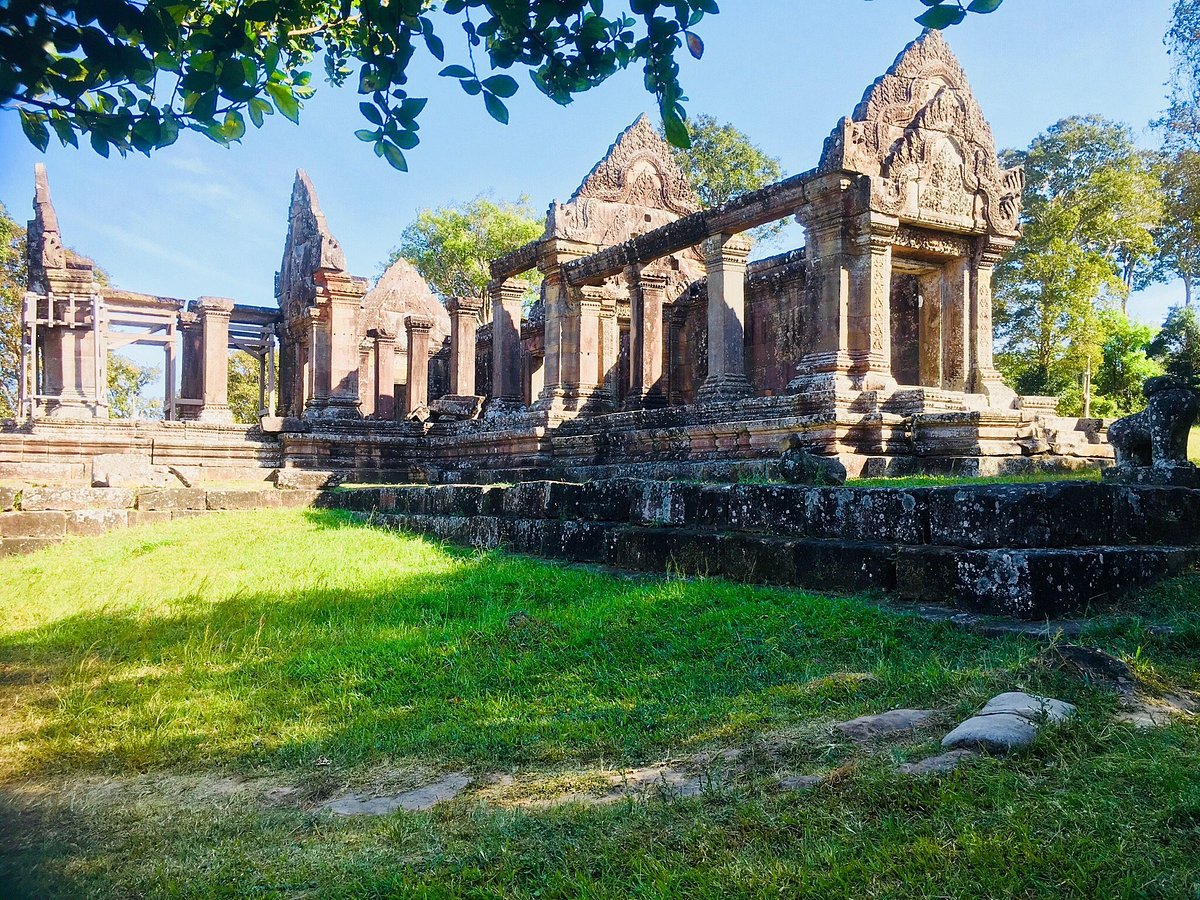
The main tourist attraction of Cambodia is the ancient archeological ruins of Angkor, a World Heritage Site in Siem Reap.
Hanoi, Mai Chau, Lan Ha bay, Hoi An, Siem Reap, Mekong cruise and Saigon
22 Days - 21 Nights
Ancient Kingdoms of Indochina and the Siam
Chiang Rai, Siem Riep, Phom Penh, Luang Prabang
15 Days - 14 Nights
Overview
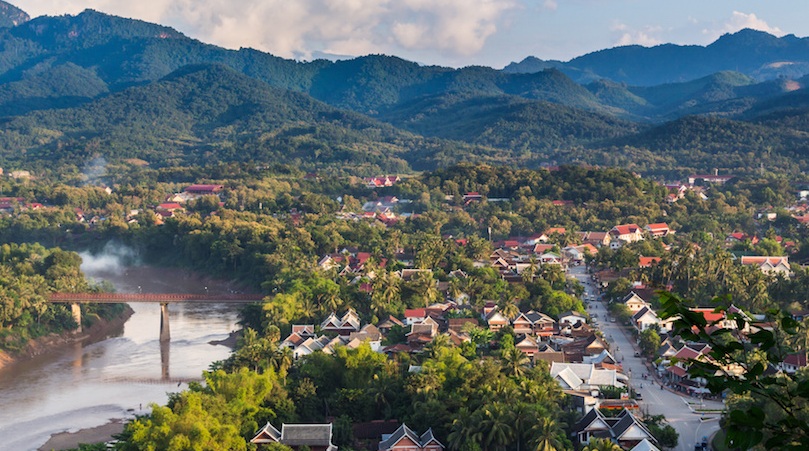
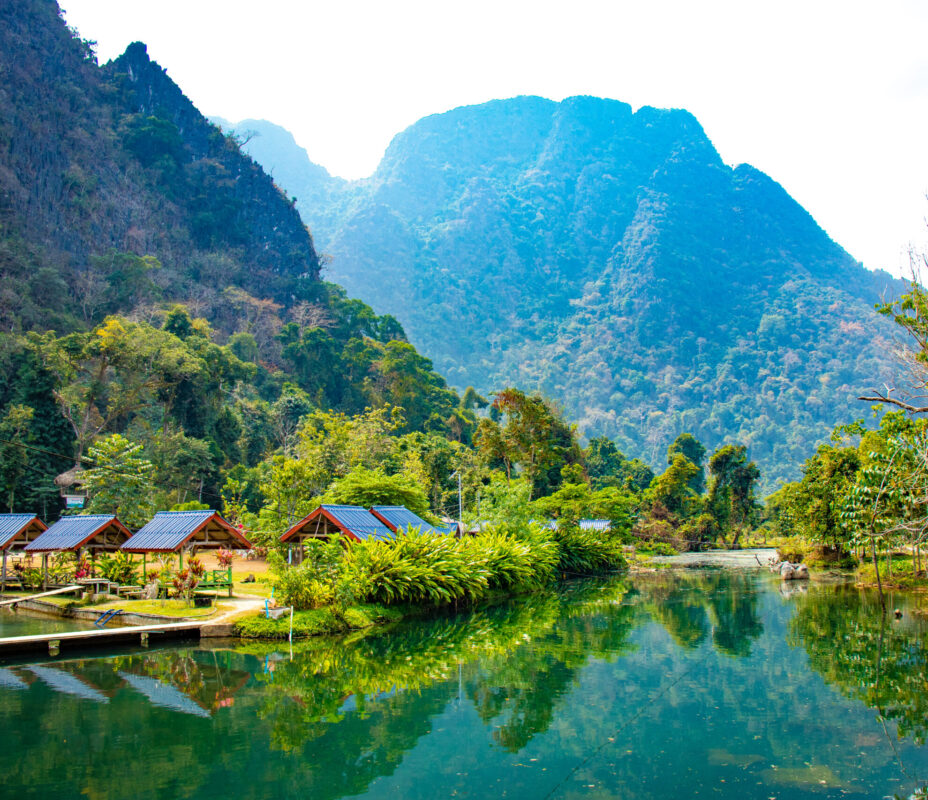
Laos, a peaceful land-locked nation, is one of Southeast Asia’s hidden gems. The stunning natural beauty of forested mountains and valleys teeming with wildlife combined with a fascinating Buddhist culture make Laos a superb destination for those seeking an adventurous and authentic cultural experience.
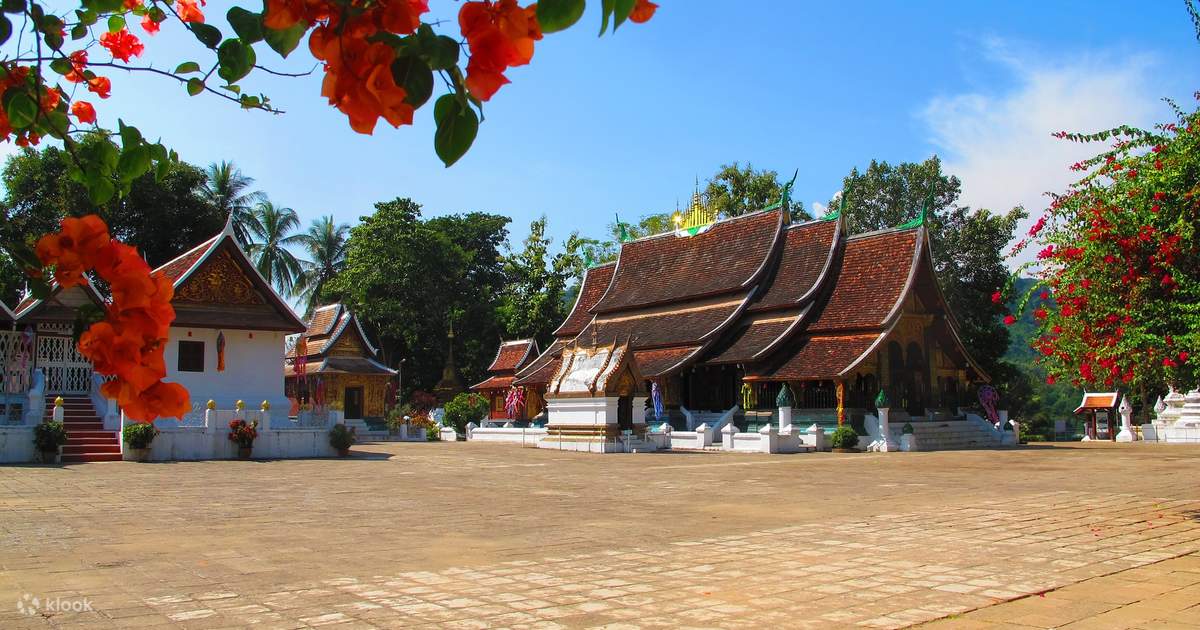
The tranquil capital city of Vientiane maintains a vintage charm with its faded old colonial architecture juxtaposed with ornate, gilded temples.
Eating in Laos is also a communal activity, where dishes are shared by all at the table.
Laotian dishes are very similar to Thailand and Vietnam in terms of flavour and ingredients, which often consist of fresh herb, spices, noodles, and rice. Khao niaw (sticky rice) is a staple food among the Laotians. Traditionally steamed in a cone-shaped bamboo basket, the rice is then placed in a covered basket, where it is eaten by hand alongside spicy soup, and meat-based dishes. Eating in Laos is also a communal activity, where dishes are shared by all at the table.
Aside from local delicacies, Laos’ capital Vientiane is serviced by good French restaurants and cafes – a remnant of the country’s colonial era. If you’re looking to savour authentic dishes during your holiday, check out this list of must-try foods in Laos.
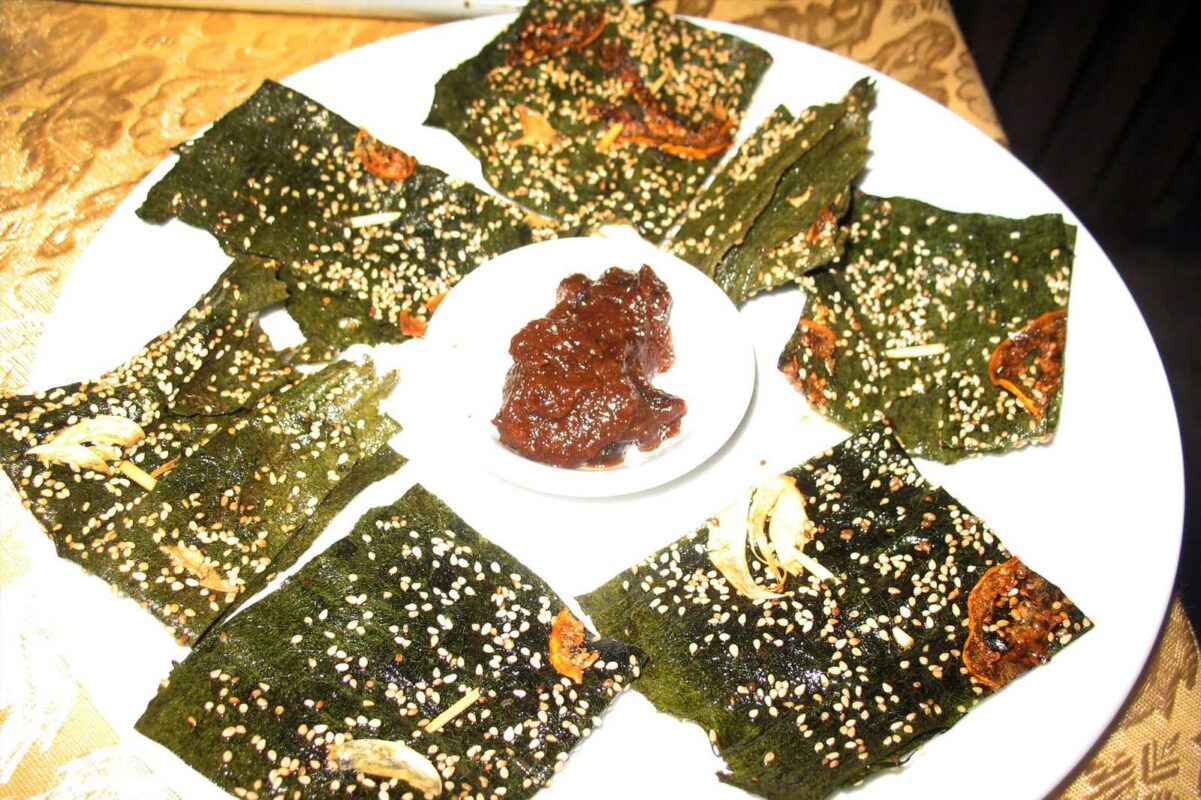
Kaipen (Fried Seaweed)
Kaipen (or kai paen) is a type of Laotian snack made with freshwater green algae harvested from the Mekong in northern Laos. After a rinse, the algae is pressed into paper-thin sheets and seasoned with sliced garlic and sesame seeds, before it’s left to dry in the sun.
The best way to eat kaipen by frying the sheets until crispy and having it with jaew bong – this dipping sauce is a combination of roast chilli and thin pieces of buffalo skin.
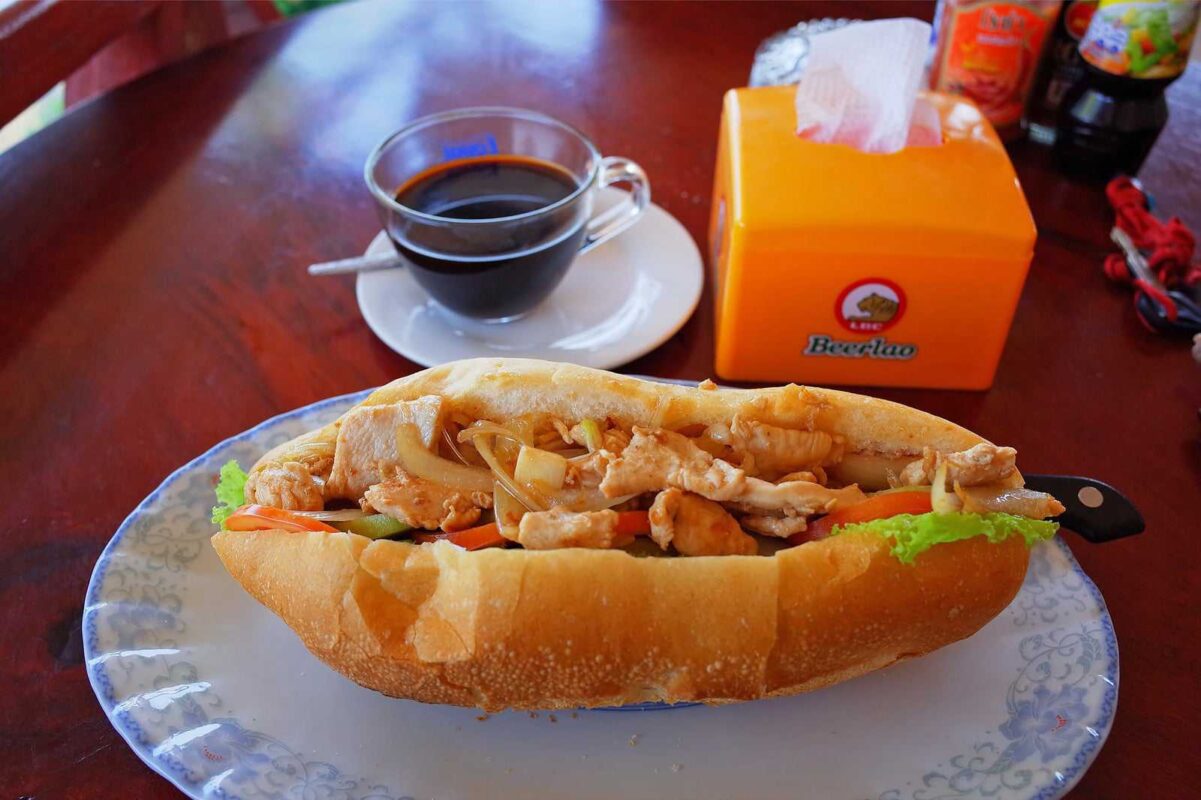
Khao Jee (Baguette) Khao jee is similar to the Vietnamese banh mi – you’ll get a baguette stuffed with lettuce, sliced tomatoes, carrot, onion, moo yor (pork lunchmeat), chopped ham, and topped with pâté or chilli sauce.
You’ll find many road vendors selling this portable Laos street food at rather cheap prices. Khao jee is often enjoyed for breakfast, together with a cup of strong filtered coffee.
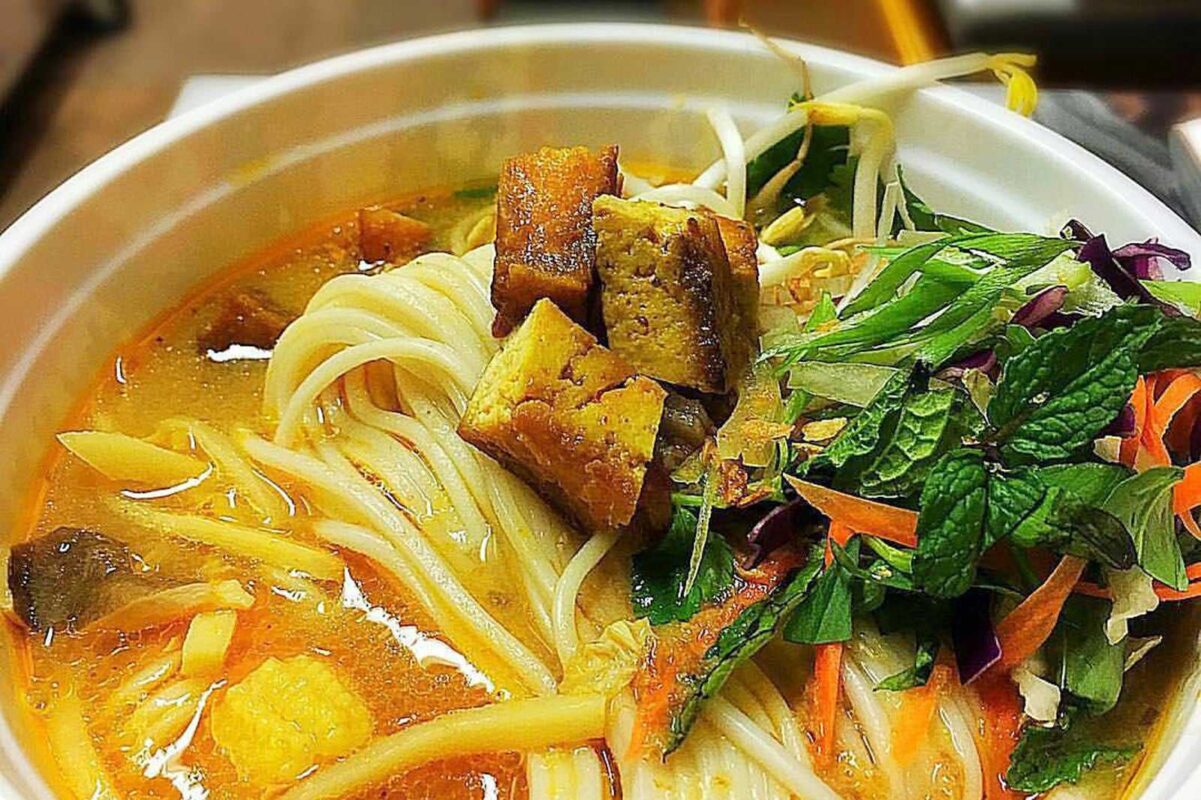
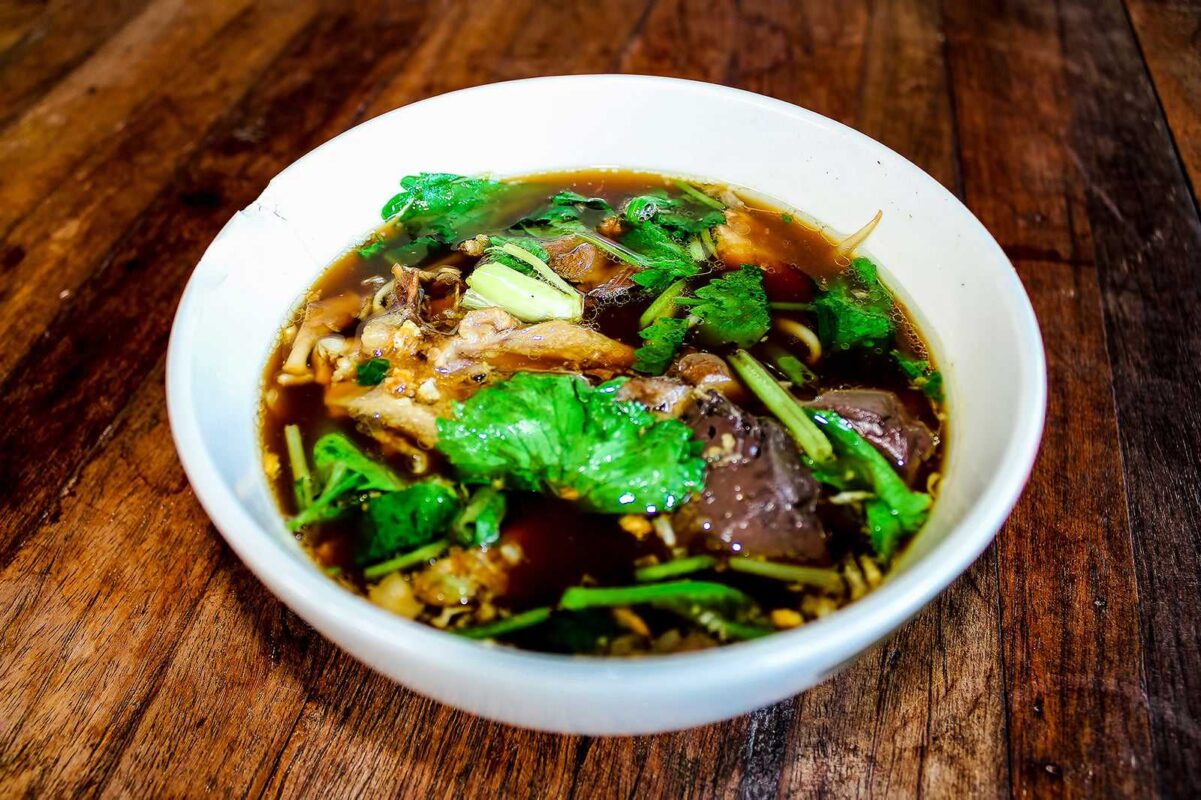
Khao Poon (Spicy Noodle Soup) Khao poon is a type of comfort food in Laos, consisting of rice vermicelli noodles in a spicy soup. The long-simmered soup is made of pounded meat (chicken, fish, or pork), fish sauce, garlic, shallots, chillies, lime leaves, galangal, and perilla leaves.
You also get an assortment of toppings such as shredded cabbage, shallots, spring onion, coriander, mint leaves and string beans.
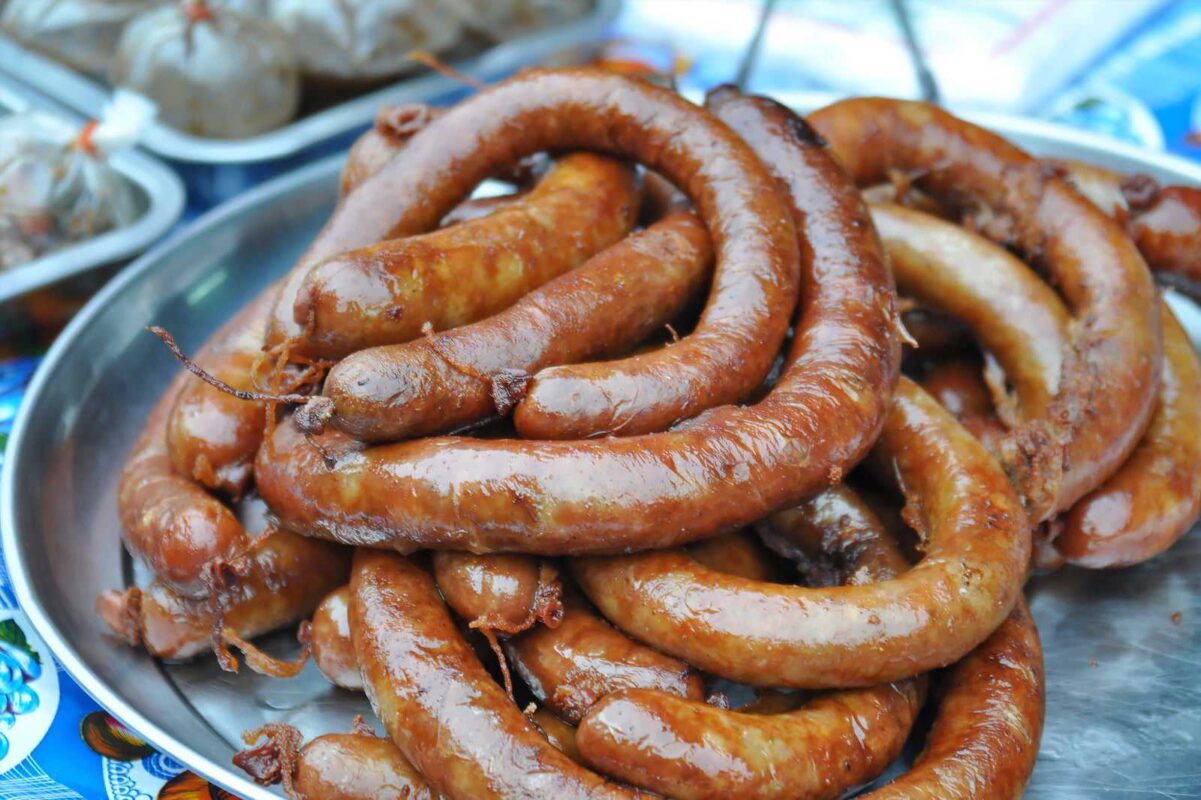
Lao Sausage
Sai gok (Lao sausage) is a popular Laotian appetiser that’s often eaten with sticky rice and fresh vegetables. It’s usually made with chopped pork meat and seasoned with lemongrass, galangal, kaffir leaves, shallots, cilantro, chillies, and fish sauce. You can find sai gok hanging on hooks at local markets and roadside stalls in Laos.
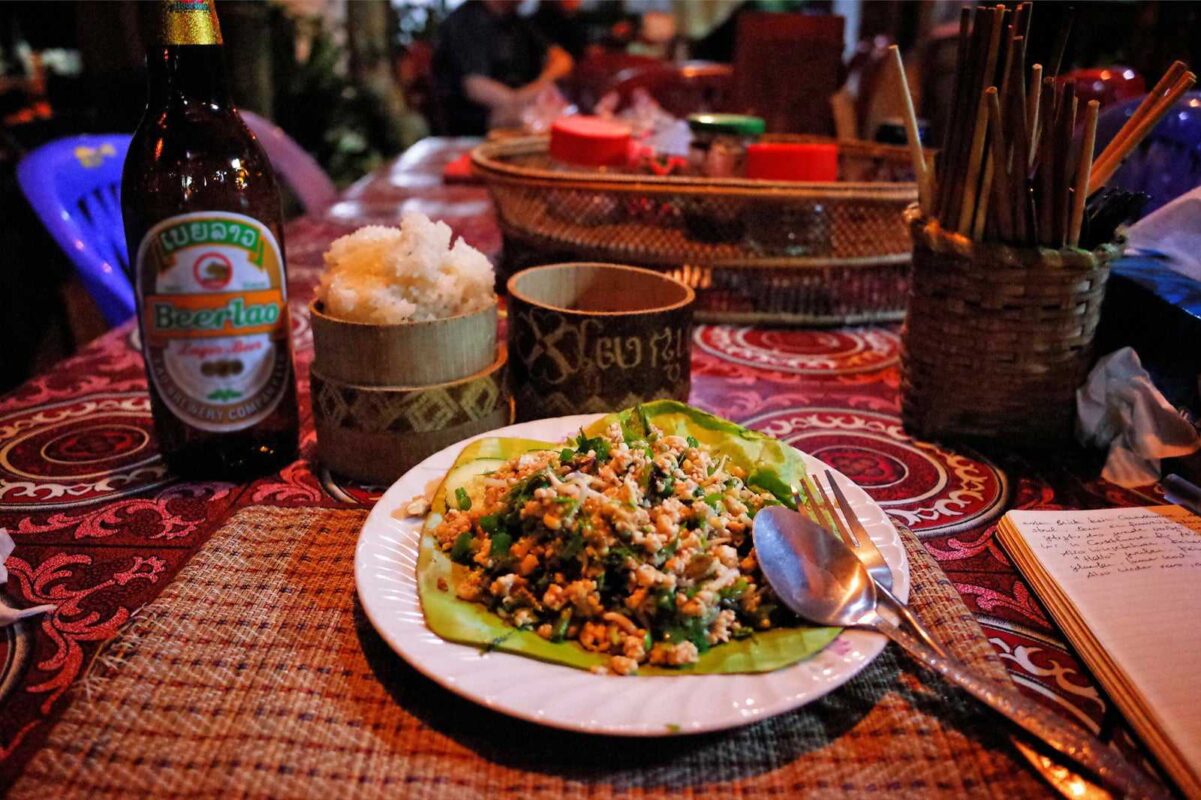
Larb (Minced Meat Salad)
Larb or laap is widely considered as Laos’ national dish – this meat-based salad is flavoured with mint leaves, chilli, fish sauce, and lime juice, giving it a zesty flavour. Most restaurants use pork or chicken to make larb, but you can also enjoy it with minced beef, duck, or fish.
Like most Laotian dishes, locals enjoy this salad with sticky rice and various side dishes.
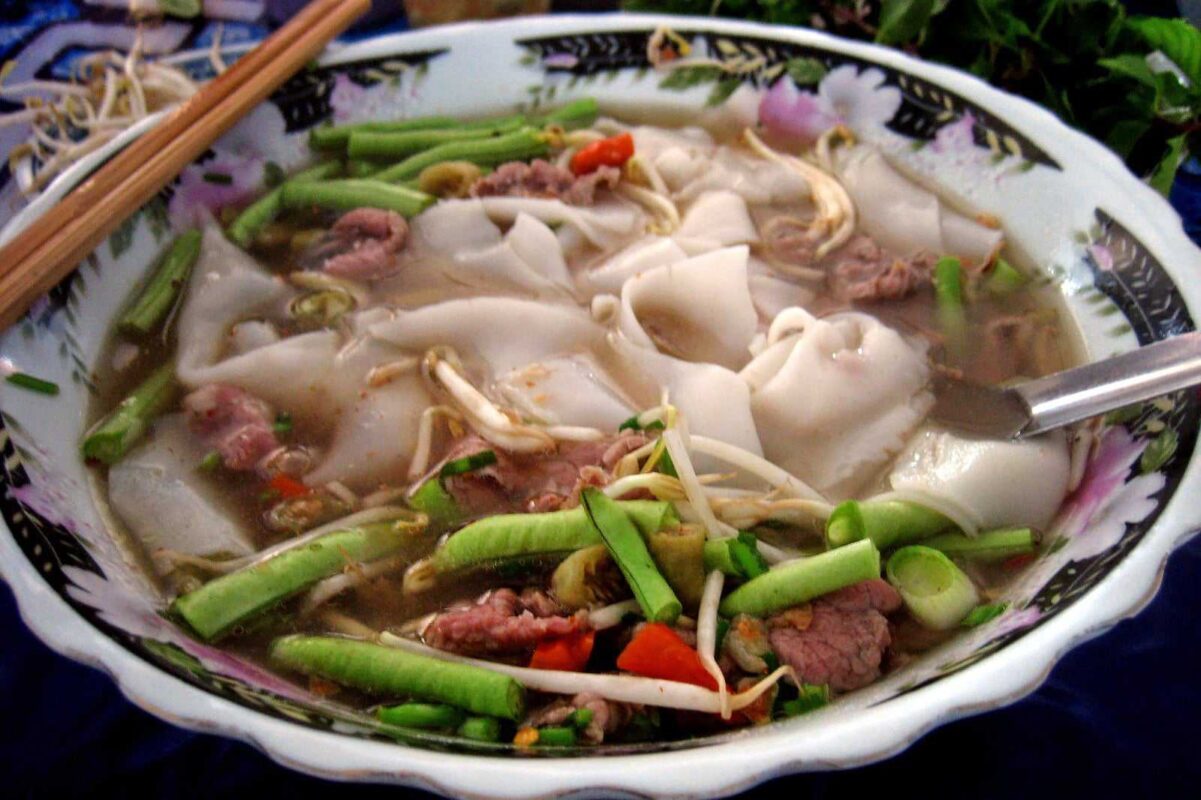
Laos Pho
Laos pho is a beef noodle soup that originates from Vietnam, but is also commonly eaten by the local population. It has thin slices of beef, pork, or chicken, tripe, meatballs and sometimes innards (heart, liver, or tongue). You can choose to have it with flat or thin rice noodles. Laos pho is often topped with chilli oil, lime juice, bean sprouts, long beans, holy basil, and cilantro.
Or lam is a mildly spicy and thick Lao stew that originates from Luang Prabang. It contains beans, eggplant, lemongrass, basil, chilies, wood ear mushrooms, cilantro, and green onion.
Or Lam (Lao Stew)
A unique ingredient in this stew is mai sa kaan a locally grown vine that’s not exactly edible (you’re supposed to chew and spit it out). Or lam also contains dried buffalo meat, beef, or chicken meat.
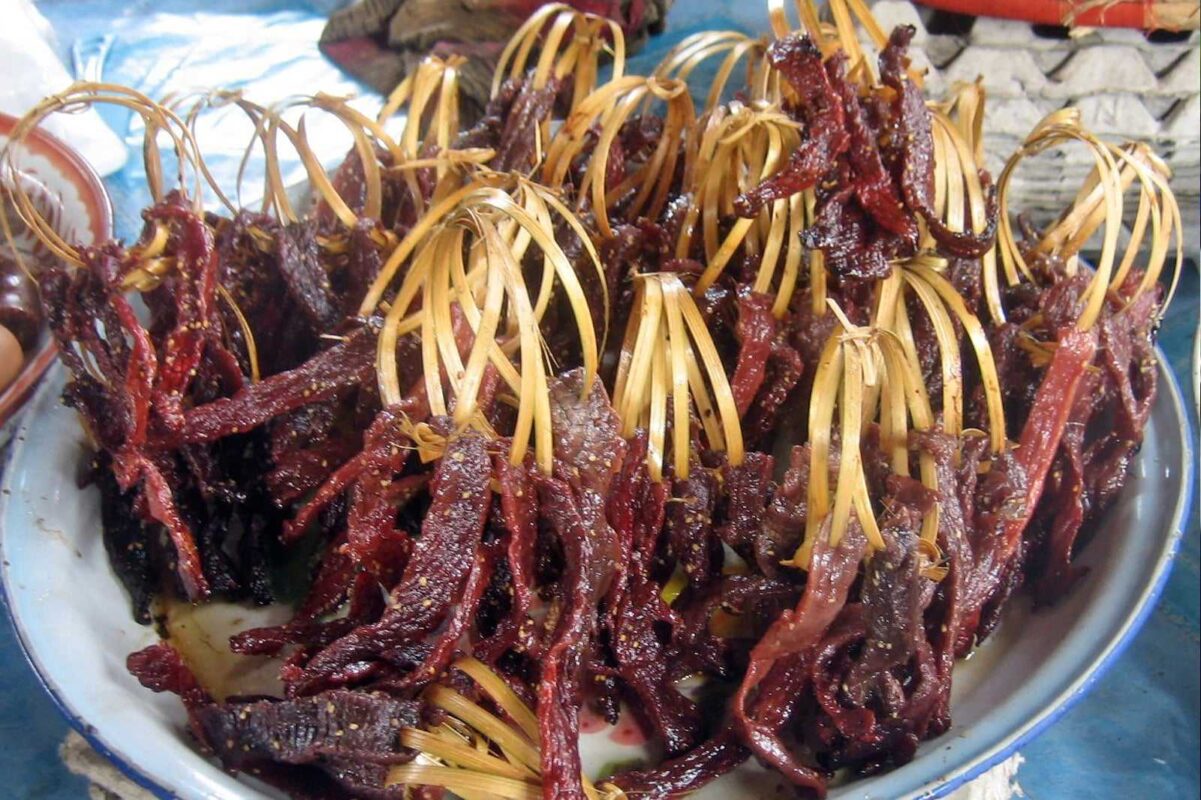
Sien Savanh (Lao Beef Jerky)
Sien savanh is often eaten as a snack together with Beerlao (lagers produced by the Lao Brewery Company). Similar to beef jerky, it’s made using beef flank steak (some places use water buffalo meat) that’s marinated in a mixture of garlic, fish sauce, ginger, sesame seed, sugar, salt and black pepper.
The strips are then left in the sun until dried. Locals enjoy sien savanh by grilling it over a charcoal stove for a smoky flavour, before eating it with sticky rice or jaew maak len (a tomato-based chilli dip).
Som Moo (Preserved Pork Sausage)
Som moo is made from chopped, fermented raw pork – including the rump and skin – wrapped in green leaves. Fresh chilies are usually mixed into the meat, which adds a spicy kick to this Laos appetiser.
You can enjoy it raw or grilled, though the raw version is preferable among locals. Enjoy som moo with raw cabbage leaves and string beans, which help reduce the sourness.
Tam Mak Hoong (Papaya Salad)
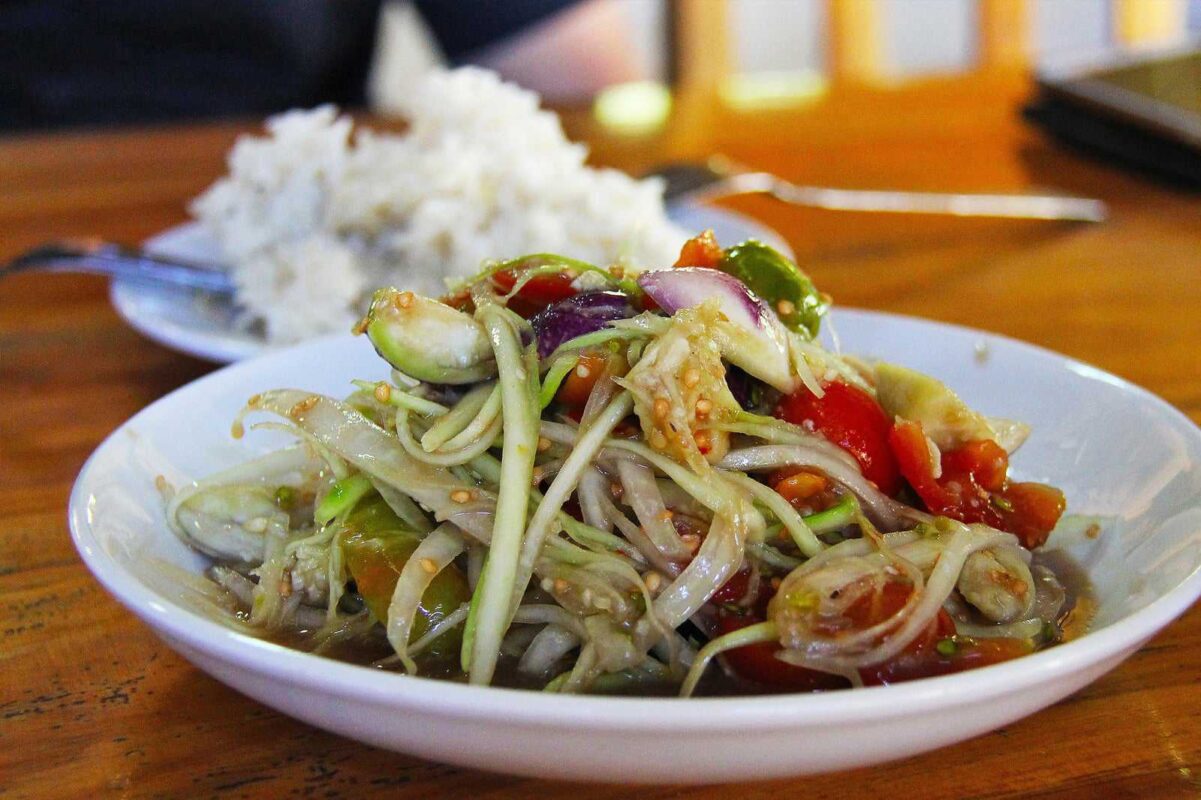
Tam mak hoong is similar to Thailand’s som tam – shredded, unripe papaya, garlic, tomatoes, chilli, palm sugar, lime juice and fish sauce are pounded in a mortar. Unlike som tam, this Lao papaya salad omits peanuts but has fermented fish sauce and shrimp paste as the key ingredients.
It can be spicy to some, but you can tone down the spiciness by enjoying tam mak hoong with sticky rice.